
Ingredients
Everything you need to now about creating and managing ingredients in Chet Notepad
Creating an ingredient
2 min read
This is the step by step on how to enter an ingredient into Chef Notepad. This is the Base to be able to build recipe smoothly.
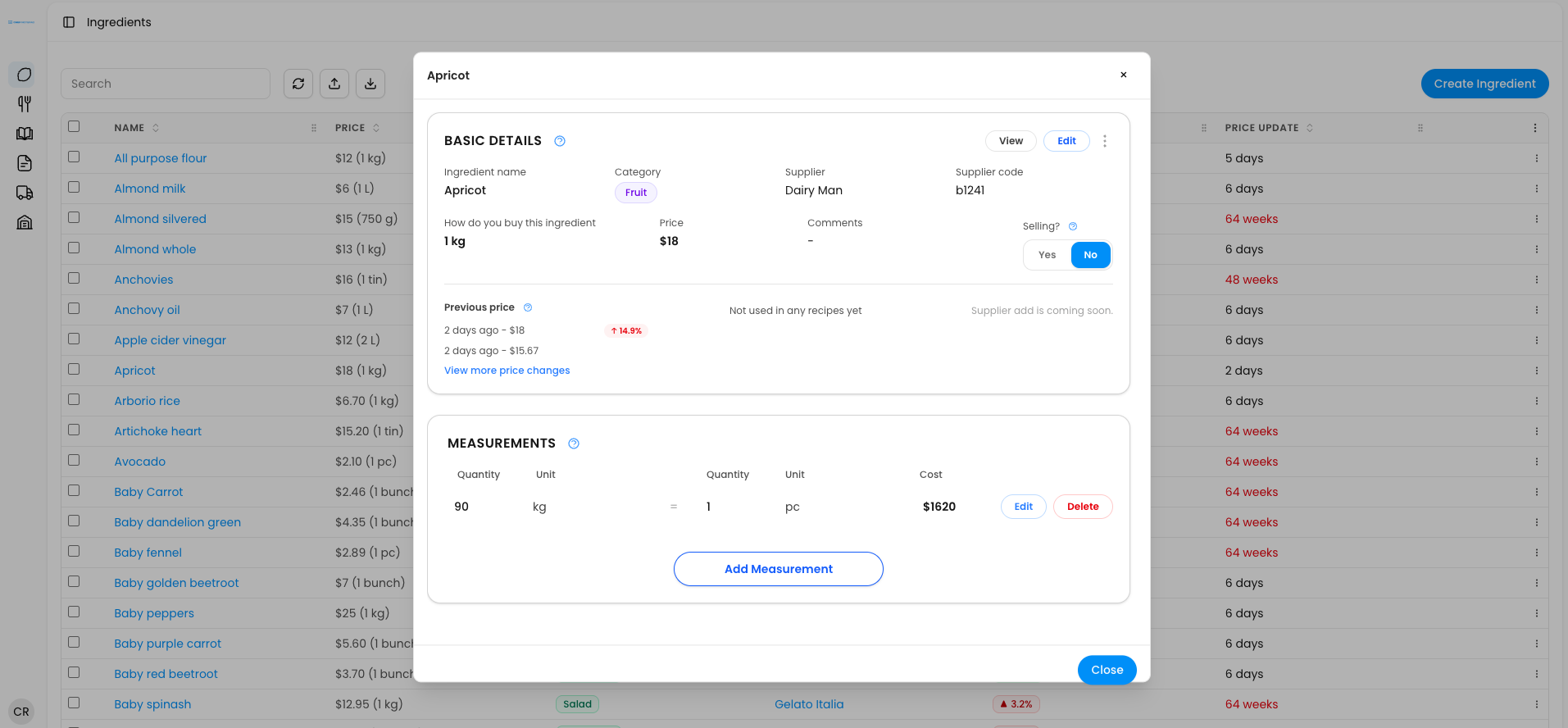
Open the Ingredients section from the menu on the left.
Click Create Ingredient.
Enter the ingredient name, select a category, and choose the supplier. If the category or supplier doesn't exist yet, simply type the name and press Enter to create a new one. You can also change the colour of the category by clicking next to it.
(Optional) Add the Supplier Code if you're using an integration that updates ingredient prices automatically.
Enter how you purchase the ingredient (e.g. 1 Box), the purchase price, and any notes if required.
If you sell this item directly (such as beverages, pastries, or loaves of bread), enable the Selling option.
Click Create to save the ingredient.
Your ingredient is now ready to use when creating recipes.
Next: Learn how to sell an ingredient, add a measurement, add wastage, navigate the ingredient page and edit an existing ingredient.
Selling an ingredient
2 min read
Some ingredients aren't used in a recipe, they're bought and sold exactly as they are, a muffin, a croissant, a can of coke, a beer, a bottle of wine. Marking these as sellable lets you price them and track their margin the same way you would a recipe.
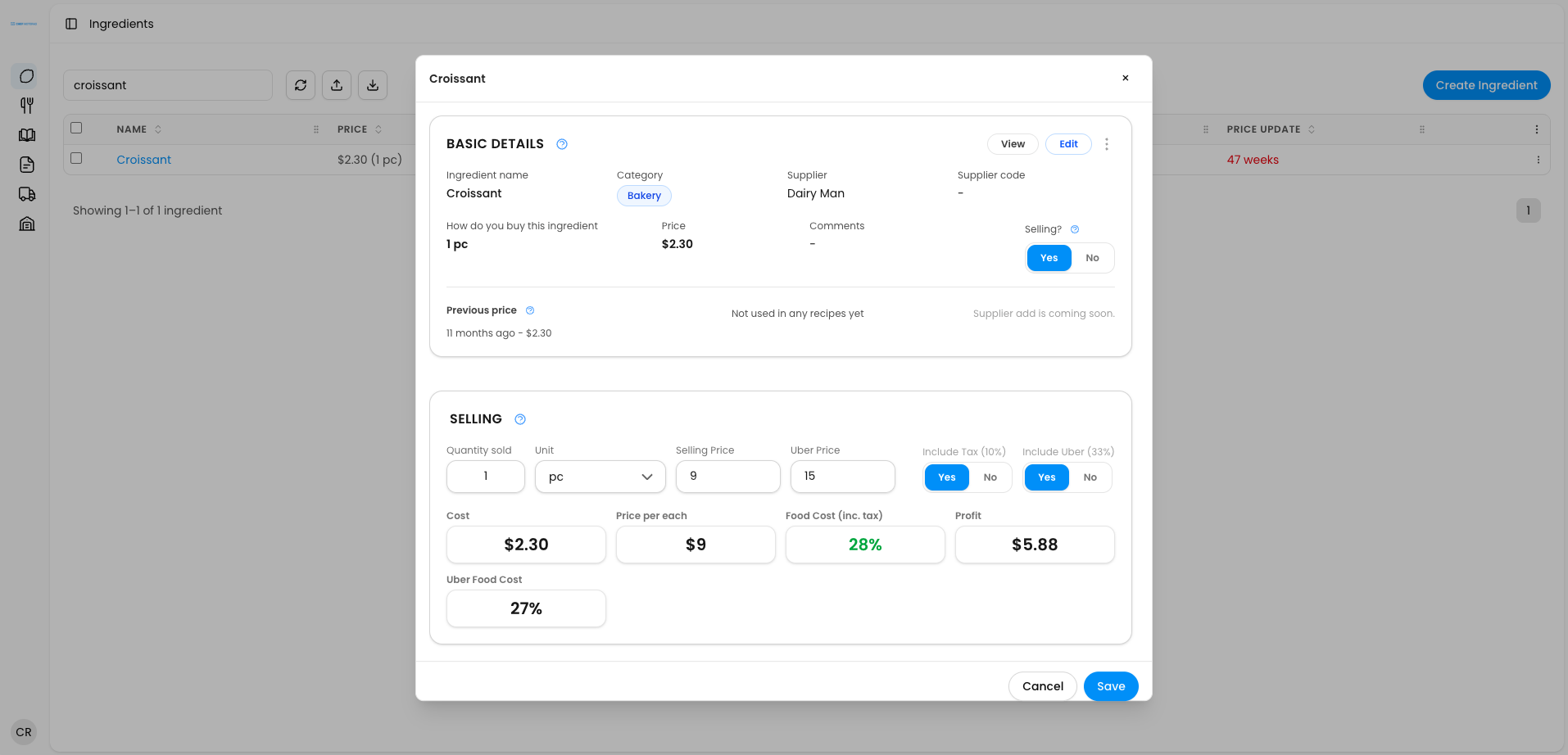
Open the ingredient and toggle Selling to Yes
Enter your selling price
Apply tax and any delivery or platform charges, like Uber Eats, if relevant
Save
You'll now see the food cost % and profit for this item, same as you would for a recipe.
Next: Learn how to add a measurement, add wastage, navigate the ingredient page and edit an existing ingredient.
Adding a measurement
2 min read
By default, an ingredient can only be used in the unit you bought it in, like a box. Adding a measurement lets you convert that into other units, like kilograms or pieces, so you can use it however a recipe calls for it.
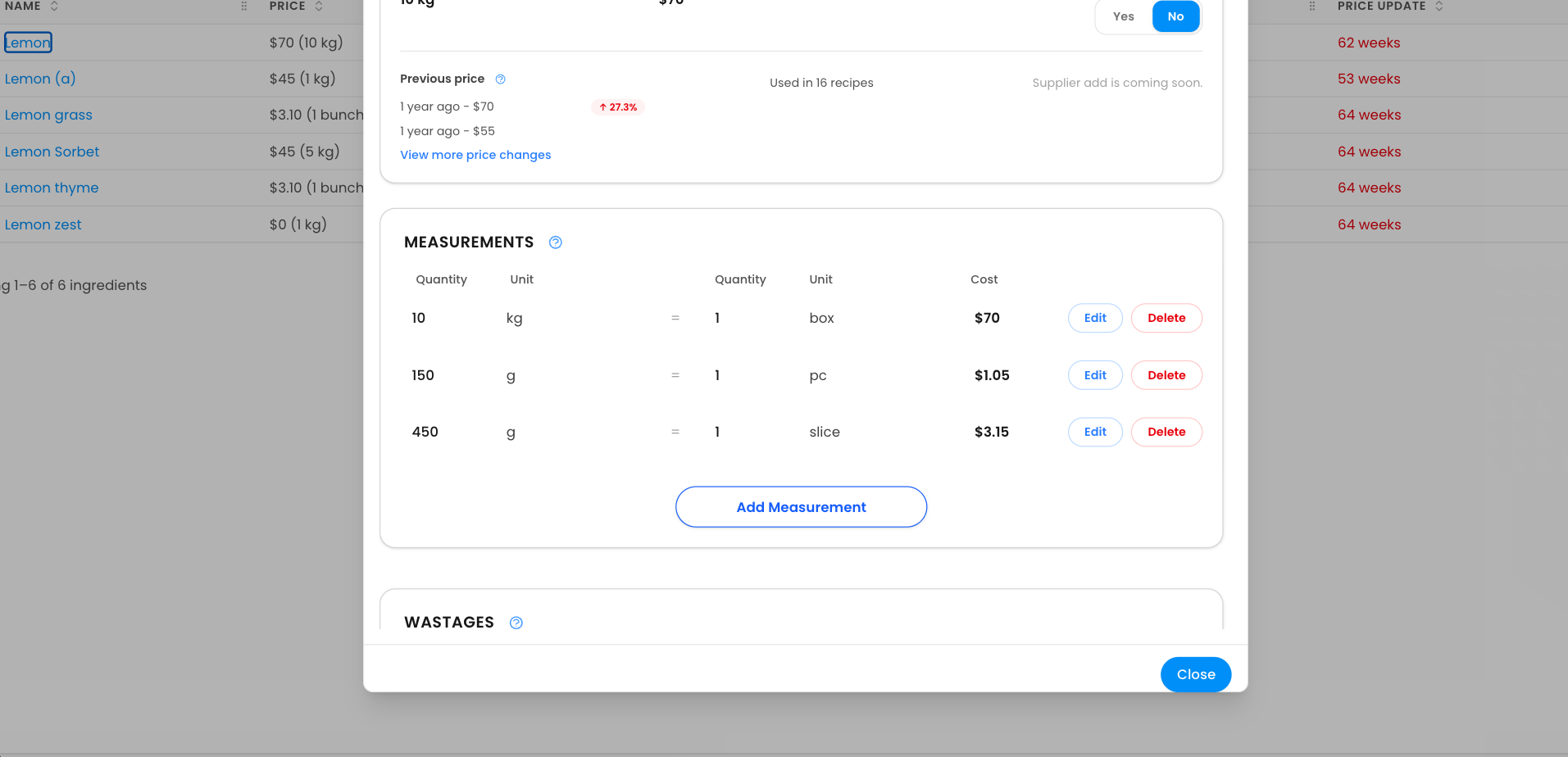
Open the ingredient you want to add a measurement to
Click Add Measurement
Enter the conversion, for example 1 Box = 15kg, or 1 Piece = 130g
Click Save
Your ingredient can now be used in a recipe with any of these measurements.
Next: Learn how to add wastage, navigate the ingredient page and edit an existing ingredient.
Adding a wastage
2 min read
Most ingredients lose some weight or volume before they're usable, peeling an onion, trimming a fish, draining the brine from a jar of olives. Recording that wastage keeps your recipe costs accurate.
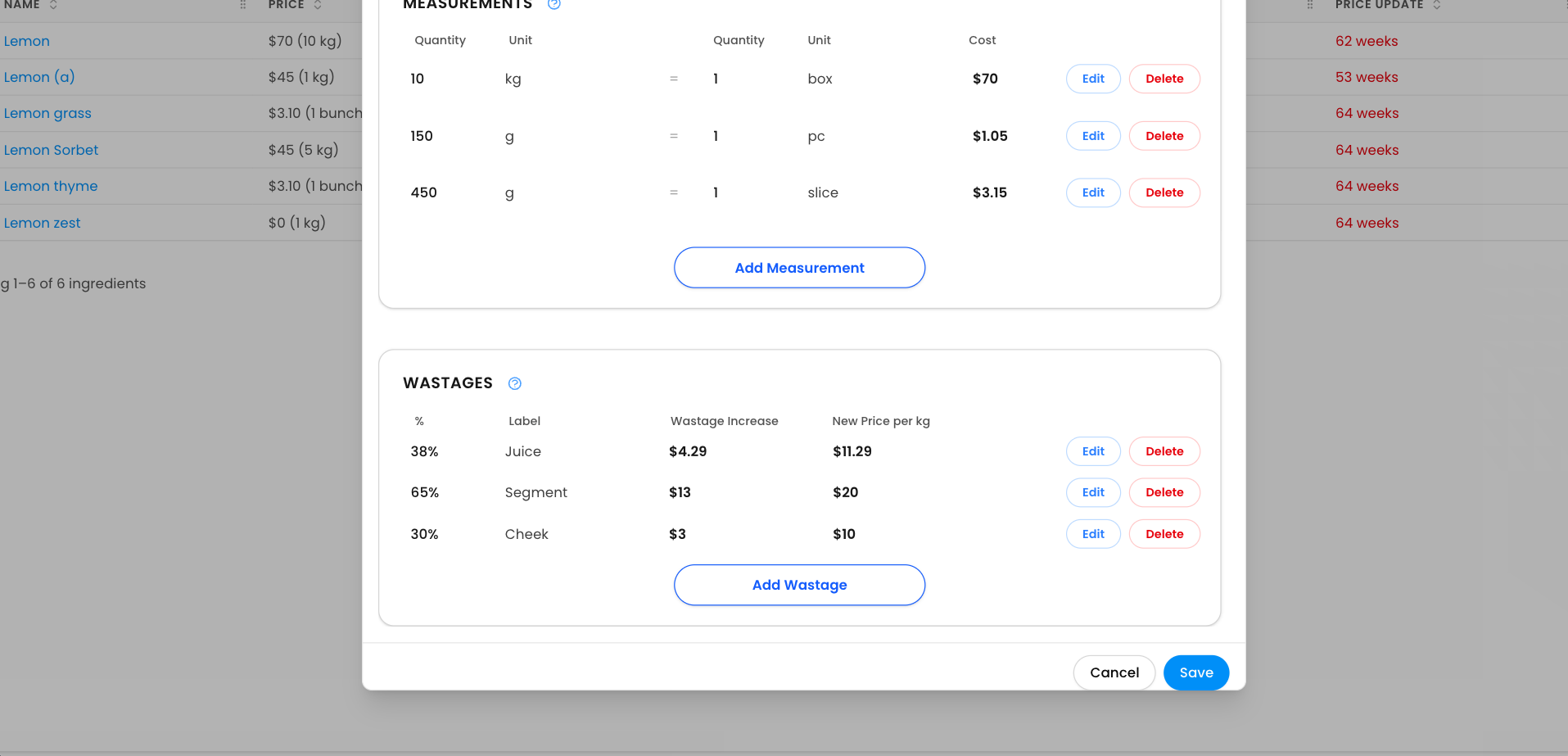
Open the ingredient and click Add Wastage
Use the built-in calculator to work out the percentage, weigh the ingredient before and after
For example, juicing 800g of lemon might only yield 350ml of juice, a wastage of 450g
Click Use this Value to save i
Your ingredient's cost now factors in that wastage automatically.
Next: Learn how to navigate the ingredient page and edit an existing ingredient.
Navigating the ingredient page
2 min read
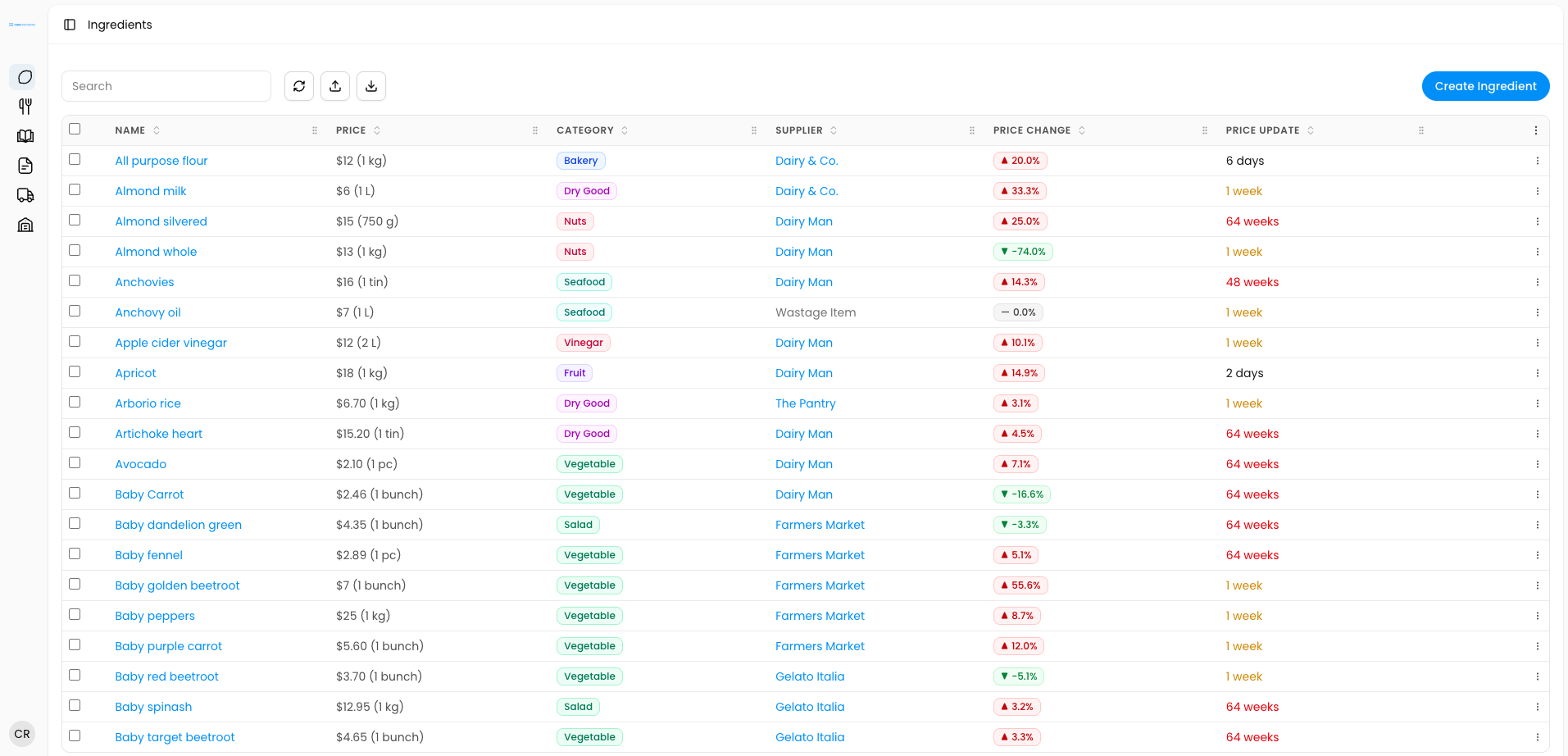
This page gives you a full overview of every ingredient at a glance, with the layout fully customisable to how you like to work.
Customising the view
Click any column header to sort it lowest, highest, or alphabetically
Drag a column's edge to resize it
Drag a column header to reorder it
Choose which columns are visible from the column settings
Viewing and filtering
Click an ingredient to view or edit its full details
Click a category or supplier name to filter the list to just that category or supplier
Next: Learn how to edit an existing ingredient.
Edit an existing ingredient
2 min read
Editing the details
Click directly on the ingredient
Click Edit, make your changes, then Save
Updating the price
Click directly on the price
Enter the new price
The last-updated date and price fluctuation update automatically. Recently updated prices show green, older ones fade to black, then orange, then red, a useful flag for prices that need checking.
Viewing price history
Open the ingredient to see all previous price changes
Click the three dots next to an ingredient to undo a price change
How price changes affect your menus
Updating an ingredient's price flows straight through to every recipe and menu using it. For example, updating the price of your snapper will automatically update, and show the fluctuation on, your Snapper Carpaccio.
Removing an ingredient
Ingredients aren't deleted outright, removing one is a soft delete, you can restore it anytime from Manage Ingredients in settings.